Conservation & Land Stewardship
Conservation & Land Stewardship
Sage & Sun Ranch sits on land that has been shaped by generations of use , and we believe it is our responsibility to leave it healthier than we found it. Our conservation work is guided by collaboration with the USDA Natural Resources Conservation Service (NRCS) and grounded in the principles of regenerative land management.
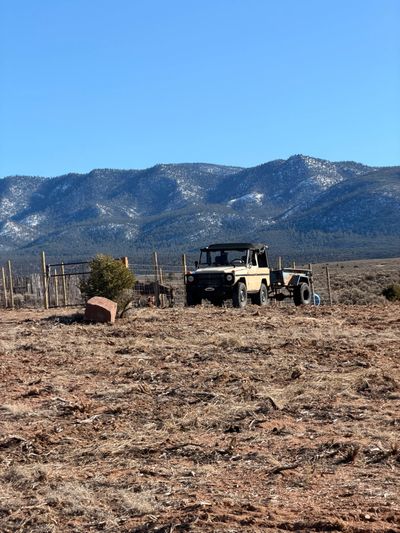
We have placed the entire property under a conservation plan that includes erosion control along an active arroyo, native rangeland restoration, soil health improvement through composting and cover cropping, and wildlife habitat enhancement. Earthen berms and strategic planting slow water movement across the landscape, reducing erosion and allowing moisture to infiltrate rather than run off.
Our long-term vision includes expanding native grass coverage with certified seed mixes appropriate for high-desert rangeland, building pollinator habitat, and maintaining the property as a working example of how small-scale agriculture and land conservation can support each other. Every decision we make , from grazing management to garlic production , is filtered through the
Rudolf Steiner and the Biodynamic Vision
Our conservation work is also informed by the ideas of Rudolf Steiner, the Austrian philosopher who founded biodynamic agriculture in 1924. Steiner saw the farm as a living organism , a self-contained, self-sustaining whole where soil, plants, animals, and the farmer are all part of one interconnected life system. Long before the modern organic movement, Steiner argued that chemical fertilizers degrade the vitality of soil and food, and that true fertility comes from building the biological life within the land itself.
Biodynamic farming emphasizes composting as a central practice, using specially prepared herbal compost preparations to enliven the soil and stimulate microbial activity. At Sage & Sun Ranch, we follow this principle closely. Our composted alpaca and horse manure, combined with organic amendments, is the backbone of our soil-building strategy , not an input we purchase from outside, but a product of the ranch ecosystem itself. Steiner also emphasized the importance of biodiversity on the farm, which aligns with our commitment to integrating livestock, garlic production, native grassland restoration, and wildlife habitat into one unified operation. The goal is a farm that functions like a healthy ecosystem , diverse, resilient, and increasingly self-sufficient over time.
To explore Steiner's agricultural philosophy, start with his foundational lecture series published as "The Agriculture Course" (1924). The Biodynamic Association (biodynamics.com) is an excellent resource for understanding biodynamic principles and finding community.
Further Reading and Resources
Savory Institute , savory.global , Global hub for Holistic Management training, research, and land regeneration projects worldwide.
Biodynamic Association , biodynamics.com , Education, certification, and community for biodynamic farmers and gardeners.
USDA Natural Resources Conservation Service , nrcs.usda.gov , Federal agency supporting conservation planning, soil health assessment, and cost-share programs for landowners.
Recommended Reading: "Holistic Management" by Allan Savory, "The One-Straw Revolution" by Masanobu Fukuoka, "The Agriculture Course" by Rudolf Steiner, "Dirt to Soil" by Gabe Brown, and "The Soil Will Save Us" by Kristin Ohlson.question of whether it strengthens the land for the next generation.
NRCS Conservation Practices
Practices Aligned with USDA EQIP and CSP Programs
Sage & Sun Ranch actively implements conservation practices recognized by the USDA Natural Resources Conservation Service (NRCS). Our work aligns with several NRCS Conservation Practice Standards eligible for support through the Environmental Quality Incentives Program (EQIP) and Conservation Stewardship Program (CSP). Prescribed Grazing (CPS 528): We rotate alpacas, horses, donkeys, and goats across designated paddocks to prevent overgrazing, allow rest and recovery of native grasses, and improve forage quality. Our grazing plan is designed to mimic natural herd movement patterns consistent with Holistic Management principles. Cover Crop (CPS 340): Between garlic rows and in fallow areas, we plant cover crops to protect the soil surface, suppress weeds, fix nitrogen, and feed soil biology. This practice reduces erosion and builds organic matter in our high-desert soils. Composting Facility (CPS 317): All livestock manure is composted on-site using a managed system that includes alpaca, horse, and goat manure blended with carbon-rich bedding material. The finished compost is applied to garlic beds and restoration areas, closing the nutrient loop without relying on external inputs. Mulching (CPS 484): We apply organic mulch to garlic beds and around newly planted native grasses to conserve soil moisture, moderate soil temperature, and suppress weeds , critical practices in our arid 7,000-foot elevation environment. Restoration of Rare or Declining Habitats (CPS 643): We are actively restoring native high-desert grassland that was degraded by decades of unmanaged grazing. Our seed mixes use locally adapted native species appropriate for northern New Mexico, and we monitor establishment and ground cover progress annually. Nutrient Management (CPS 590): All soil amendments , compost, worm castings, and cover crop residues , are applied based on soil test results and seasonal needs, ensuring nutrients reach the root zone without runoff or waste. These practices form the foundation of our conservation plan and demonstrate our commitment to measurable, science-based land stewardship that qualifies for NRCS partnership and cost-share assistance.

Impact & Results
Measuring What Matters on the Land
Regenerative land stewardship is only as credible as the outcomes it produces. At Sage & Sun Ranch, we are committed to tracking and sharing the measurable results of our conservation work , both to hold ourselves accountable and to contribute real data to the broader regenerative agriculture community. Soil Organic Matter: We conduct annual soil tests across garlic beds, pastures, and restoration areas to track changes in organic matter content. Building soil organic matter is the single most important indicator of soil health improvement, and our composting, cover cropping, and managed grazing practices are designed to increase it steadily over time. Ground Cover & Vegetation: Using photo monitoring points established across the property, we document changes in ground cover, bare soil exposure, and native grass establishment. Our goal is to reduce bare ground and increase perennial plant diversity in areas previously degraded by unmanaged grazing. Water Infiltration: We measure how quickly water enters the soil using simple infiltration tests. Healthy soil with good structure and biological activity absorbs rainfall rather than shedding it as runoff. Improved infiltration reduces erosion and makes every drop of our limited high-desert precipitation count. Biodiversity: We track the diversity of plant species in our restoration areas, monitor pollinator activity during growing seasons, and document wildlife use of the property. A healthy ranch ecosystem should support an increasing variety of life. Garlic Yield & Quality: As a working farm, we track garlic production data including bulb size, variety performance, and pest pressure. Our regenerative practices aim to produce exceptional food while building the land , not at its expense. Carbon Sequestration Potential: Through soil organic matter increases and native grass restoration, our land is actively drawing carbon from the atmosphere and storing it in the soil. We are exploring partnerships with soil carbon measurement programs to quantify this contribution. We believe in transparency and welcome visitors, researchers, and fellow land stewards to see our results firsthand. If you are interested in our data or would like to visit the ranch, please reach out through our Contact page.